Software engineering · Established practice

GAS
Development
Management

We design, build and maintain software for organisations whose processes do not fit off-the-shelf products — custom applications, web platforms, cloud infrastructure and the integrations that hold them together.

gasdevelopmentmanagement.com

A software engineering workspace with monitors displaying application code and a data visualisation
01The company

Engineering work, described in plain terms.

GAS DEVELOPMENT MANAGEMENT LTD is a software engineering company. Our work covers the full path from an unclear requirement to a running, maintained system: understanding how a process actually operates, deciding what software should do about it, building it, and keeping it dependable afterwards.

We work in small teams with direct contact between the people writing the software and the people who will rely on it. That removes translation layers and shortens the distance between a question and a decision.

This website describes our services and approach. It does not publish client names, case metrics or certifications.

02Core technology capabilities
C·01

Application engineering

Server-rendered and client-side applications built on typed languages, with explicit data models and versioned schemas.

C·02

Data and persistence

Relational schema design, migration discipline, indexing and query review so data stays correct as volume grows.

C·03

Interfaces and APIs

Documented HTTP interfaces with validated inputs, predictable error shapes and versioning that does not break callers.

C·04

Automation and delivery

Build pipelines, automated checks and repeatable deployments so releasing a change is routine rather than an event.

03

Custom software development

When a process is specific enough that adapting it to a product means losing what makes it work, custom software is the appropriate answer. We model the domain explicitly: entities, states, permitted transitions and who is allowed to perform them.

The result is a system whose rules live in one place instead of in the habits of the people operating it — with an automated test suite that states those rules in executable form.

  • — Domain model and schema documentation
  • — Source code in a repository you control
  • — Tests covering core business rules
  • — Deployment and environment configuration
04Web application engineering
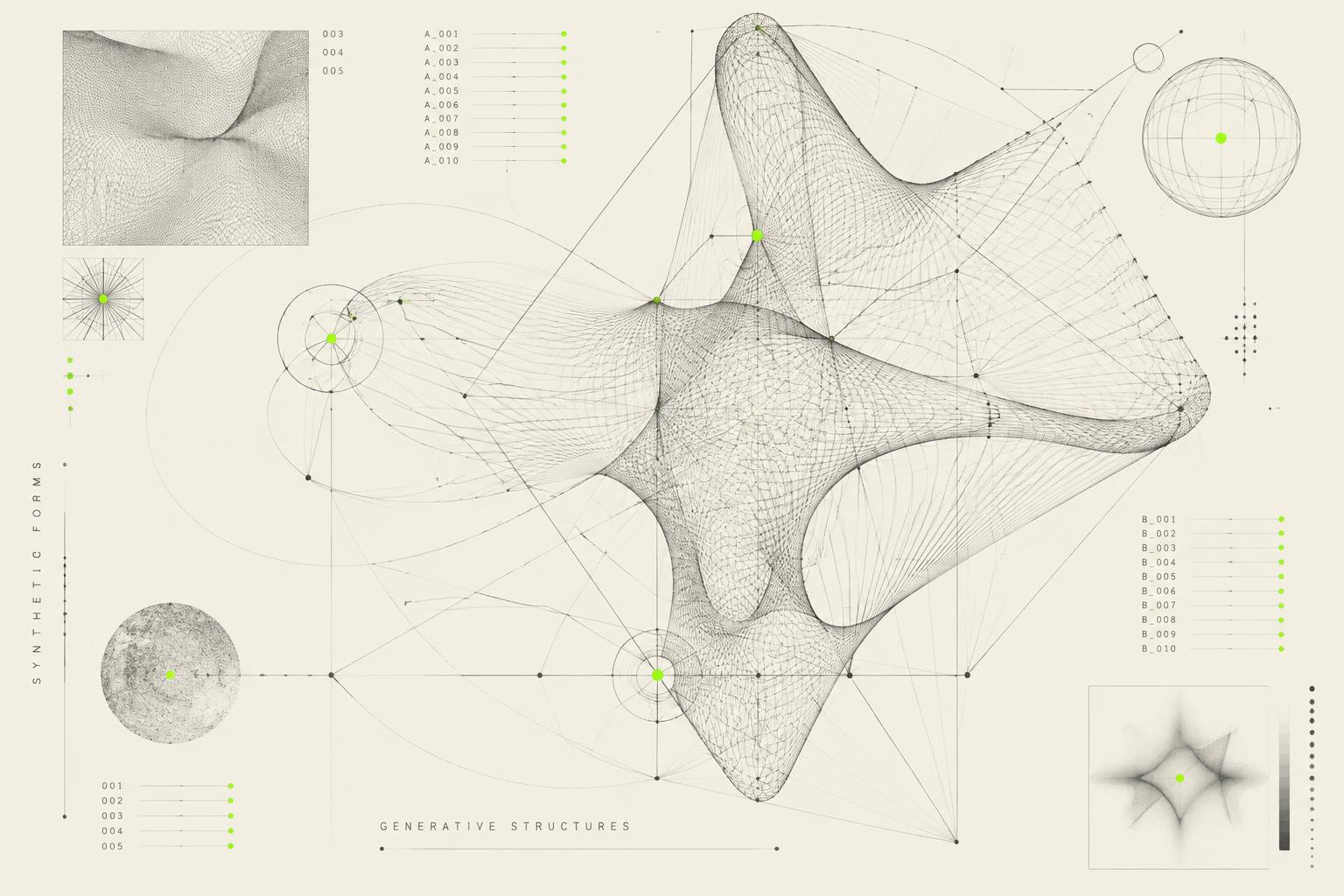
Abstract technical diagram of a generative wireframe structure with annotated measurement lines

Interfaces that hold up under real use.

A web application is judged on its worst state, not its best: a slow connection, a partially filled form, an unexpected server response. We build those states deliberately, so the interface stays comprehensible when conditions are imperfect.

Layouts are responsive from the first commit and tested across mobile, tablet and desktop. Semantic structure, keyboard operability and contrast are build requirements rather than later corrections.

05Cloud and infrastructure

Environments that can be rebuilt from source.

Infrastructure is defined in version control so environments can be recreated rather than remembered. Development, staging and production are separated, and deployment runs through an automated pipeline with the same steps every time.

Logging, metrics and alerting are configured as part of the build, and backups are only considered complete once a restore has been tested.

A dark data centre corridor lined with server racks showing status indicator lights
06Systems integration and workflow automation

Information should be entered once.

Integration mapping

Sources, destinations and transformations are documented before any transfer logic exists, with one authoritative system per data point.

Safe re-runs

Flows are idempotent and retryable, so a failed batch can be repeated without duplicating records.

Exception handling

Records that cannot be processed are surfaced with enough context to resolve them, instead of failing silently.

Audit trail

Every processed record leaves a traceable entry, which makes reconciliation a query rather than an investigation.

07

Product discovery and technical planning

Before significant engineering spend, a short planning engagement clarifies what is being built and what is deliberately excluded. We interview the people who perform the work, review the systems already in use, and write a plan a non-technical stakeholder can challenge.

Estimates are presented as ranges tied to named assumptions. Where an unknown could change the shape of the work, we say so and propose how to resolve it first.

08Delivery process

Six stages, each with something reviewable at the end.

  1. 01

    Framing

    We document the problem, the people affected and the constraints that cannot move — budget ceilings, compliance requirements, existing systems.

  2. 02

    Technical planning

    Architecture options are written down with trade-offs. We identify the unknowns that could change the plan and resolve the riskiest one first.

  3. 03

    Thin slice

    A narrow path through the whole system is built early — interface, logic, storage, deployment — to validate assumptions against running code.

  4. 04

    Incremental build

    Work proceeds in reviewable increments. Each increment is tested, deployed to a staging environment and demonstrated before the next begins.

  5. 05

    Hardening

    Performance, accessibility, authorisation paths and failure handling are reviewed together, with findings recorded and addressed.

  6. 06

    Handover and support

    Documentation, environment access and operational procedures transfer to your team, with ongoing maintenance capacity if wanted.

09

Quality assurance and security-conscious development

Verification runs throughout delivery. It is not a phase appended before release.

Automated checks

Unit, integration and end-to-end tests run on every change before it can be merged.

Code review

Every change is read by another engineer, with attention to data handling and authorisation paths.

Input validation

Data entering the system is validated at the boundary against an explicit schema.

Access control

Permissions are enforced on the server, never assumed from interface state.

Dependency review

Third-party packages and configuration are reviewed and updated on a schedule.

Release discipline

Each release has a checklist and a rollback procedure that has been exercised.

10Illustrative project scenarios

Examples of the kind of work we do.

The scenarios below are written to illustrate typical engagements. They are not descriptions of completed client projects, and no client names, outcomes or figures are implied.

Illustrative example

Operations console replacing spreadsheet workflows

A distribution team tracks orders across several spreadsheets. An internal console consolidates them into one record set with role-based access, validation on entry and an export for finance. Described here to illustrate the type of work; not a completed client project.

Illustrative example

Integration between a CRM and a billing platform

Customer records and invoice states are synchronised through an event-driven flow with idempotent handlers and an audit log, removing duplicate manual entry. Described here to illustrate the type of work; not a completed client project.

Illustrative example

Cloud migration of a legacy internal application

An application running on a single unmanaged server is containerised, moved to managed infrastructure with separated environments, automated deployment and tested backups. Described here to illustrate the type of work; not a completed client project.

11Collaboration principles
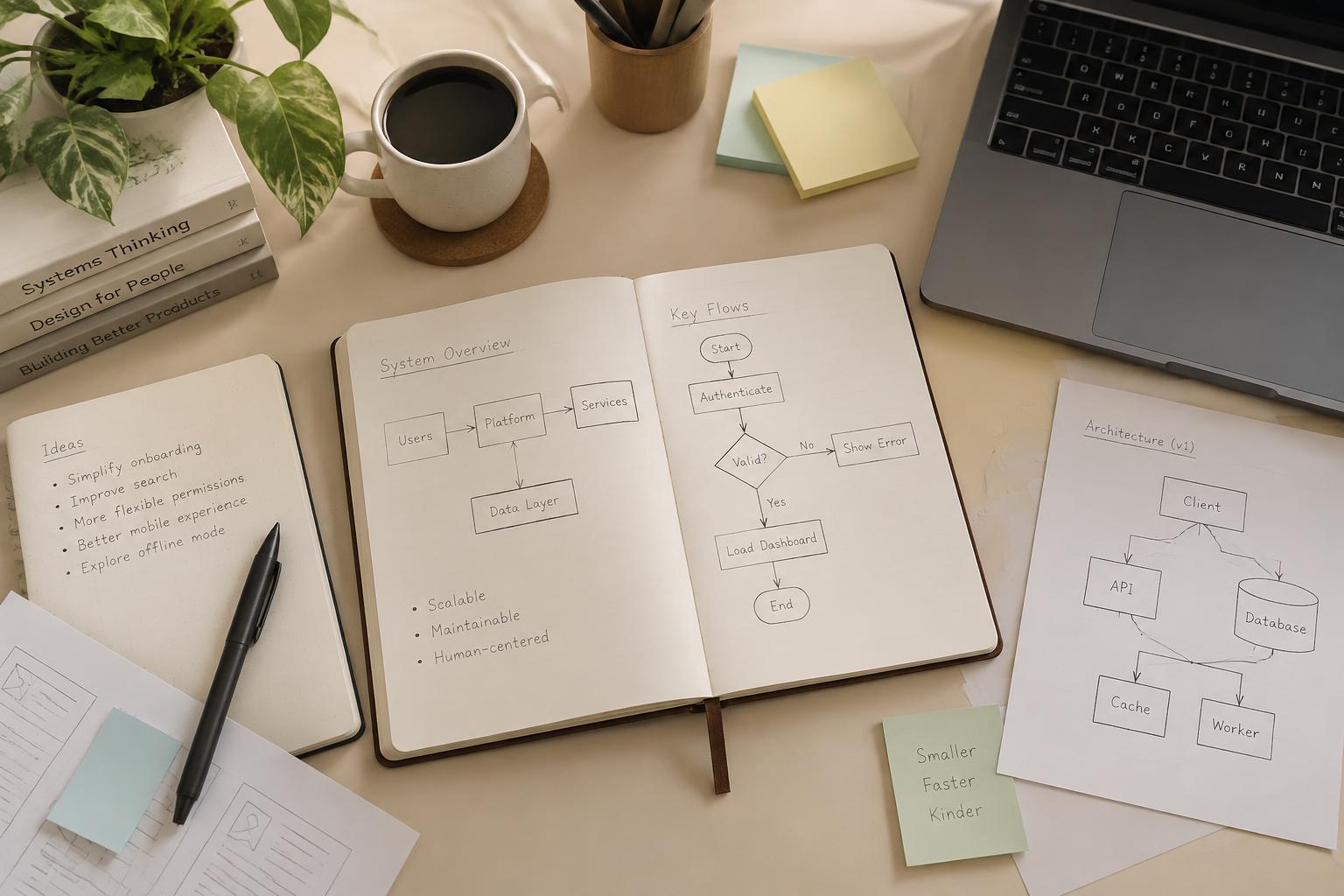
A workspace desk with an open notebook showing hand-drawn system architecture and flow diagrams

How we work with your team.

Written decisions

Architectural choices are recorded with their reasoning so future engineers understand why the system looks the way it does.

Plain reporting

Progress is reported against agreed increments. Delays and blockers are raised when they appear, not at the end of a phase.

One authoritative source

Every piece of data has a defined owner system. Copies are derived, never competing.

Transferable work

Code, configuration and documentation are prepared so another team could pick the system up without a rewrite.

12Frequently asked questions

Questions we are usually asked first.

What kind of organisations do you work with?
Organisations that need software shaped around a specific operational process — internal tools, customer-facing applications, or integrations between systems they already run.
How is a project scoped?
Through a short planning engagement that produces a written problem statement, architecture options, a risk register and a phased delivery plan with indicative effort ranges.
Who owns the code?
You do. Source code is held in a repository under your control, and infrastructure definitions are delivered alongside it.
What technologies do you use?
Typed application languages, relational databases and mainstream cloud platforms. Selection follows the requirements of the project and the maintainability of the result, not novelty.
Do you take over existing codebases?
Yes. We begin with a review of the code, dependencies, data model and deployment setup, then propose a sequence of changes before making structural ones.
How do you handle changes mid-project?
Increments are short, so a change of direction affects the next increment rather than the whole plan. Scope changes are documented with their effect on schedule and effort.
What happens after launch?
Maintenance can continue as recurring capacity covering dependency updates, monitoring review, incident response and small enhancements — or the system can be handed over entirely.
How do we start a conversation?
Send an email to [email protected] describing the process you want to improve, the systems currently involved and any deadline you are working towards.
13Contact information

Written enquiries, answered by an engineer.

Company
GAS DEVELOPMENT MANAGEMENT LTD
Website
https://gasdevelopmentmanagement.com

The address above is shown as plain text. Copy it into your email client; this site contains no forms or clickable elements.